
The Capping Ceremony: A Rite of Passage Across Generations
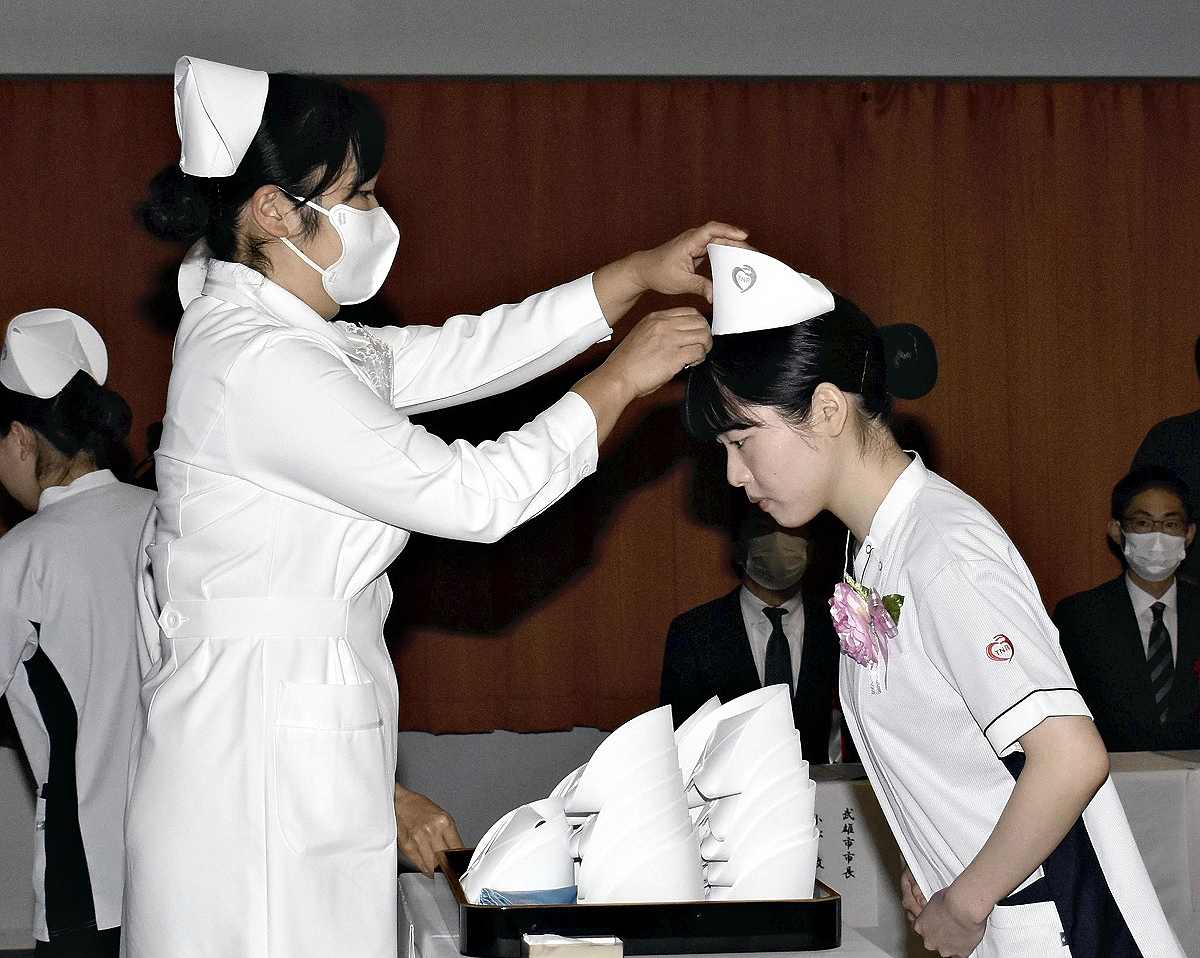
This collection of images illustrates the profound continuity and evolution of nursing, centered around its most enduring symbol: the nurse’s cap. While the first two images capture the cap in active clinical practice during the mid-20th century, the third image shows a modern Capping Ceremony, a traditional rite of passage that marks a student’s transition into the professional world.
The Significance of the Capping Ceremony
The capping ceremony is a symbolic event usually held after a student nurse completes their initial preclinical training. It represents:
-
Professional Identity: Receiving the cap signifies that the student has attained the necessary knowledge and character to begin caring for patients.
-
A Commitment to Service: Historically, the ceremony often included the lighting of a “Nightingale Lamp” and the recitation of the Nightingale Pledge, an oath of ethical practice.
-
The Lineage of Mentorship: In the third photo, we see a senior nurse or instructor placing the cap on a bowing student. This act emphasizes the passing of responsibility and the deep-rooted tradition of mentorship within the profession.
The Evolution of the Cap: Function vs. Symbolism
| Feature | Mid-Century Era (Images 1 & 2) | Modern Era (Image 3) |
| Primary Use | Daily operational wear; a mandatory part of the clinical uniform. | Primarily ceremonial; used for graduations and formal rites. |
| Function | Kept hair neatly tucked back for hygiene and identified rank/school. | Serves as a link to professional history and institutional pride. |
| Design | Often starched cloth or paper; required complex folding or pinning. | Often pre-folded or streamlined for ceremonial ease. |
The Cap in Action: A Tool of Authority
In the mid-20th-century photos, the cap serves a practical purpose. In Image 1, the two nurses in the medication room wear caps that identify them as peers within a specific hospital system. In Image 2, the nurse’s cap is visible even in silhouette, acting as a beacon of professional presence at the patient’s bedside. During this time, the cap was a signal to patients and doctors alike that the wearer was a trained professional with the authority to manage medications and complex equipment like the glass IV bottle.
The Modern Context: Tradition Meets Contemporary Care
The third image, featuring a modern capping ceremony in Japan, demonstrates how these traditions have been adapted globally. Despite the shift toward modern scrubs and high-tech PPE (visible in the instructor’s mask), the symbolic weight of the cap remains.
-
The Bow: The student’s bow reflects the cultural values of respect and humility inherent in the nursing vocation.
-
The Uniform: Notice the student wears a modern, functional tunic with a professional logo, bridging the gap between historical tradition and current medical standards.
Summary: The Thread of Continuity
While the daily use of the nurse’s cap has largely faded in favor of more practical headwear (or none at all) to better suit the fast-paced, high-acuity environment of modern hospitals, the capping ceremony ensures that the values the cap represents are not lost.
Whether it is the nurse in the 1940s carefully inspecting a glass vial or a modern student signaturenurse.com receiving her first cap, the core of the profession remains unchanged: a commitment to meticulous safety, technical mastery, and a compassionate presence at the bedside. These images together tell a story of a profession that honors its past while resolutely moving toward the future.
Leave a Reply